




Luke36
Piloti professionisti
-
Registrato
-
Ultima Visita
Contenuti inviati da Luke36
-
Ma la notizia secondo cui Ecclestone avrebbe pagato una tangente di circa 45 milioni di dollari alla CVC di Gerhard Gribkowsky ...... è vera oppure ........ tutto insabbiato ?
-
Grazie Ale !!
-
Sai ..... forse girerei il punto di vista: sono proprio i circuiti veri ad essere di troppo secondo Ecclestone. Meglio avere tutti circuiti insignificanti.
-
Ciao Ale .... segnale questo mio pensiero: i 3d aperti con il "sedere", della serie due righe e stop (mi riferisco a Barrichello e Brambilla) e poi giustamente chiusi, non sarebbe meglio rimuoverli proprio e rifarli come Dio comanda ? Insomma rispettando gli standard di qualità del forum ?
-
Non so ma leggendo l'intervista mi sono sentito a "casa". Come dire ...... ok allora non sono solo io il pazzo visionario.
-
Buone feste a tutti. Io le passerò a lavoro. Ma il fine anno no
-
Un mese notevole per un forum "neonato" direi. E' solo l'inizio
-
http://motorsport.nextgen-auto.com/Force-India-annonce-ses-pilotes-cette-semaine,53862.html
-
MI PIACE !!!!
-
Nessun dubbio: Raikkonen su Schumacher in entrata all Eau-Rouge !!!! Il povero Bellof voleva fare proprio come fece Kimi. Li si rischia e parecchio !
-
Io prendo i pop corn Maria ...... buona fortuna.
-
... carta Kant hahahahahaha grande Gio !
-
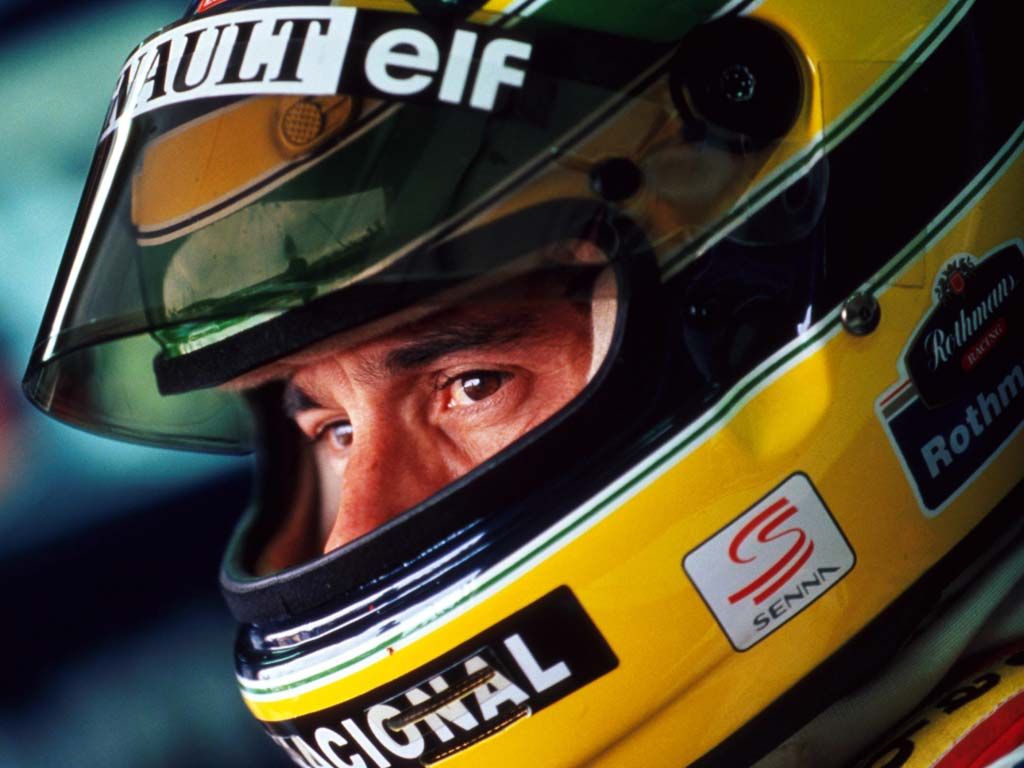
Segnalo a chi ne avesse curiosità e passione il seguente indirizzo web. http://ayrton-senna.co.uk/index.php
-
Instituto Ayrton Senna is the realization of the three time Formula 1 World Champion’s dream to offer essential opportunities to new Brazilian generations to develop their potentials so they can become champions in school and in life. Our work is focused on education, an important tool to promote human development. We believe it is the most effective means to transform everyone’s innate potential into capabilities and skills to ensure one’s active participation in society. Since 1994, the Institute develops educational solutions to fight bad quality in public education that hinder millions of children and young people to successfully move on with their studies. These educational programs proportionally equalize quantity and quality, that is, they are reproduced in large scale, at low cost and yield effective results. To implement its programs, the Institute builds alliances with the private and public sectors and civil society. Mission Based on Ayrton Senna´s life and ideals, our mission is to positively intervene in the lives of Brazilian children and adolescents, providing them with conditions and opportunities to promote their full development as human beings, citizens and future professionals. History A non-governmental and non-profit organization, Instituto Ayrton Senna, presided by Viviane Senna, was launched in November 1994.The initiative was in conformity with the pilot’s dream: unhappy with social inequalities in his country, Ayrton had already revealed his wish to implement something tangible to help children and youngsters to fully develop themselves. Time Line 1994 - Ayrton Senna launches the Senninha cartoon character in February. Instituto Ayrton Senna is launched in November. 1995 – Direct assistance to children and young people through the Education through Sport Program. 1996 – Beginning of the scaling up strategy by Iinking direct assistance to the creation of educational solutions and to society mobilization. 1997 – The Accelerate Brazil Program is launched. 1998 – Beginning of the Alliance with the Press: 1st Ayrton Senna Grand Prix of Journalism. 1999 – Youth SuperAction, Your School at 2000 per Hour and Education through Art Programs are launched. 2000 - The Human Development Paradigm and the Four Pillars of Education become the basis for knowledge construction and for the educational activities. The www.senna.org.br portal is created. 2001 – The Connect Yourself Program is launched. Creation of the SIASI- Sistema Ayrton Senna de Informaà§à£o (Ayrton Senna Information System). 2002 – The educational solutions are adopted in almost all of Brazilian states. The Grade 10 Management Program is launched. 2003 – UNESCO grants IAS the Education and Human Development Chair award. 2004 – The Advanced Social Technologies Center is created. The 1st Ayrton Senna Racing Day Marathon is held. 2005 – Connected Community and Connected School Programs are launched. 2006 – The Gran Prix of Journalism becomes biennial. 2007 – Beginning of the Human Development Course for Journalists, held in partnership the Brazilian Association of Investigative Journalism, under the auspices of the United Nations Development Program (UNDP). 2008 – Assistances reach 10 million children and young people in Brazil. 2009 – Instituto Ayrton Senna celebrates its 15th Anniversary. UNESCO Chair In 2004, Instituto Ayrton Senna was acknowledged by UNESCO (United Nations Educational, Scientific and Cultural Organization), with the Chair in Education and Human Development for being a worldwide reference in this field as a Center for study, research and knowledge production. It is the first NGO ever, to receive such recognition. The Education and Human Development Chair’s mission is to promote an integrated system of research activities, qualification, education and documentation on the theme. By being part of UNESCO Chairs network, the Institute had access to experiences exchange among researchers and teachers from universities and institutions in Brazil, Latin America, Caribbean nations, as well as in other regions of the world. Human Development Brazil ranks the 7th place among the world’s leading economic power. This is not necessarily a reason for pride since it is the 84th in the human development index ranking. Shortening the distance between the country we are and the one we wish to be is, today, the major challenge for Brazilian society. Instituto Ayrton Senna´s mission responds to that challenge by creating human development opportunities for new generations. Therefore, it is contributing for Brazilian children and young people to become autonomous, competent, generous and proud of the nation they are helping to build. Human Development - The Human Development concept appeared in 1990, when the United Nations Development Programme (UNDP) proposed to substitute the traditional concept of the expression “Human Development†focused on the income growth and productivity, to a ? broader approach. Amartya Sen, born in India and awarded with the 1998 Nobel Prize in Economic Sciences, being the most prominent world authority in this field and was the major UNDP collaborator to compose the Human Development Paradigm. The Human Development Index was introduced to measure and analyze life expectancy, educational attainment and economic resources access (GDI per capita). Under this new paradigm, a country has a high HDI when it offers essential conditions – economic, political, social, cultural and environmental – to all individuals to develop their capabilities and to secure full rights of citizenship participation. Distance Learning In order to enlarge its operation in scale and to guarantee the same quality of the in presence activities developed, Instituto Ayrton Senna makes use of Distance Learning through digital technology. This tool allows the setting up of virtual learning and cooperation environments that, besides guaranteeing flexibility as far as time and space are concerned, give greater scope to pedagogical possibilities. The Education and Technology area makes use of the computer and the Internet to produce development opportunities for children, youngsters and adults. Two educational solutions are developed and the DL structure provides qualification for public school teachers to be able to implement these two programs. They also furnish on-line meetings, courses for public schools managers and other qualification courses on subjects related to Education. In average, 80 thousand educators are qualified each year by the Institute. Such qualification was systematized to be offered to partner cities and states. Its main tool is Distance Learning. Therefore, we are drawing a new work profile in the area of on-line qualification to generate quantity and quality, in short term and at low cost. President Viviane Senna Today, Viviane is a member of the following Boards and Councils: -Economic and Social Development Board, established by President Luàs Inà¡cio Lula da Silva in February 13, 2003; Co-founder and member of the Executive Committee of Commitment “Todos pela Educaà§à£o†(All for Education). Coordinates the Technical Committee responsible for the establishment of targets and technical guidance; -Appointed as one of the New Millennium Leaders (CNN/ Time Magazine - May/1999); -Guide Group of ItaຠSocial Program; -Advisory Board of Instituto Coca-Cola; -Instituto WCF-Brazil Advisory Board, organization founded and presided by Queen Silvia of Sweden; -United Way of Associaà§à£o Caminhando Juntos Trust -Instituto Pà£o de Aà§àºcar Board; -The only Brazilian member at the "Adults Friends of World's Children's Prize for the Rights of the Child" along with Queen Silvia of Sweden, Nelson Mandela - former president of South Africa, and José Ramos Horta, Nobel Peace Prize. -Comittee of Unibanco´s Social Investment -Advisory Board of ADVB. -Strategic Political Board of GIFE (Institutes, Foundations and Enterprises Group); -Advisory Board of Medicine College Foundation; -Board of Social Award of Gazeta Mercantil Brazilian Social Leaders Forum
-
Proporrei: a - no elettronica b - no telemetria c - si aerodinamica anche spinta d - libertà di scelta del tipo di motore (se 4 - 6 - 8 cilindri) se sovralimentato o no. No limite rpm. e - no cambio gomme f - no rifornimento Sogno ?
-
Non so se tu Alessandro o tu Gio avevate pensato al primo 3d guastato da "molestatori". Ecco ...... direi che possiamo porre questo 3d nella storia di questo neonato forum come Il Primo 3d rovinato da parte di chi soffre di "prurigo analis". Anzi ...... l'occasione è spunto per proporre l'apertura del 3d Diagnosi e Cura ......
-
Con tutto il rispetto ma ci vuole una buona faccia di bronzo a presentarsi qui. Comprendo tutto ma il rispetto e la coerenza sono il minimo che ci si aspetta in simili circostanze. Chi di male ferisce di male perisce. Purtroppo qualcuno ha fatto male. Ora non si può più tornare indietro.
-
1) Come vi trovate Bene 2) Come vi sembra Mi pare un buon forum. Certo è in rodaggio e quindi ci saranno molte modifiche ma tempo al tempo. 3) Cosa vi piace Mi piace molto la qualità degli utenti. La grafica è eccellente. 4) Cosa non vi piace Manca un pò di ordine della disposizione dei topics. In Particolare bisognerebbe evitare di aprire dei topica con 3 posts soltanto. Insomma prima di aprirli bisognerebbe sempre pensare se faranno "numero" di lettori, anche perchè questo conta molto. 5) Cosa manca secondo voi Penso che sia troppo presto per dirlo.
-